How to Tell If Watermelon Is Ripe: The Complete Visual Guide
That perfect-looking watermelon you bought yesterday turned into a disappointing, mushy mess by dinner. Sound familiar?
Learning how to tell if watermelon is ripe requires understanding the five distinct stages of ripeness — each with specific visual, auditory, and tactile cues that signal exactly when to buy and when to eat.
Quick Answer: A ripe watermelon has a creamy yellow field spot, sounds hollow when tapped, feels heavy for its size, and has a dull (not shiny) skin with brown webbing. The stem should be completely dry and brown.
Most people miss the timing because they don't understand watermelon ripeness as a progression. According to USDA research, watermelons continue developing sugars for 2-3 days after harvest, which explains why that rock-hard melon becomes perfect — then overripe — so quickly.
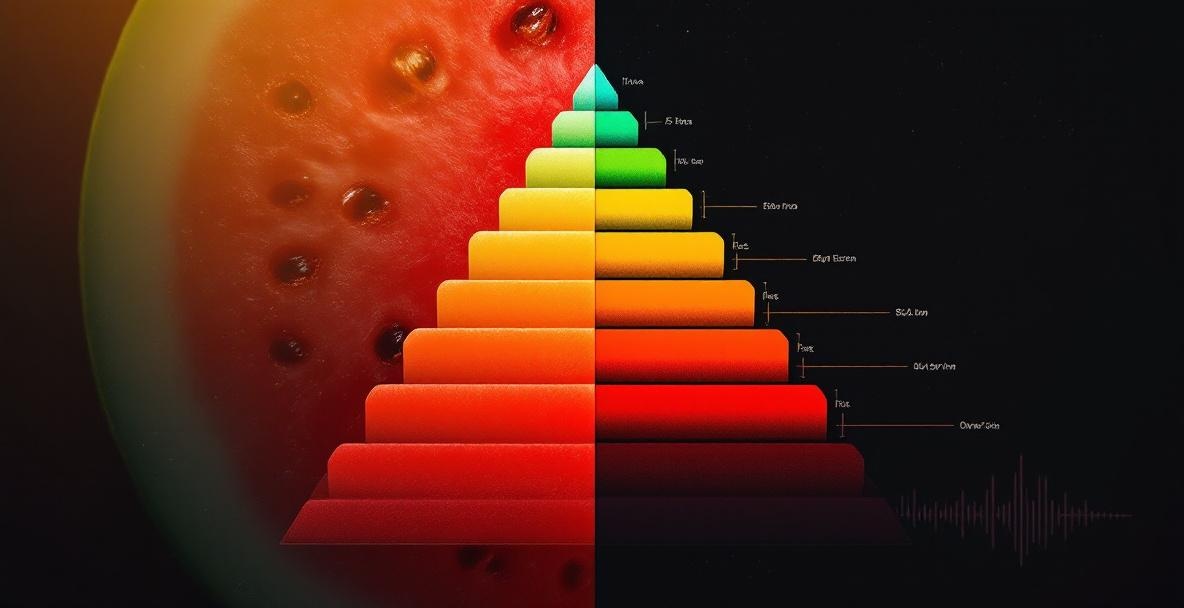
The 5 Stages of Watermelon Ripeness
Stage 1 (Unripe): White or pale green field spot, shiny skin, green stem. The watermelon tastes bland with crunchy, white flesh. Sugar content measures below 8 Brix on laboratory tests.
Stage 2 (Nearly Ripe): Light yellow field spot, slightly dull skin, browning stem. Flesh turns pale pink but remains firm. Sugar content reaches 8-10 Brix.
Stage 3 (Perfect Ripeness): Creamy yellow field spot, completely dull skin, dry brown stem. Deep red flesh with optimal sweetness. Sugar content peaks at 10-13 Brix — the sweet spot for eating.
Stage 4 (Fully Ripe): Golden yellow field spot, possible soft spots, very dry stem. Maximum sweetness but texture starts softening. Best eaten within 24 hours.
Stage 5 (Overripe): Dark yellow or brown field spot, definite soft spots, stem may be missing. Flesh becomes grainy or mushy. Sugar content may actually decrease due to fermentation.
What Does the Bottom Spot on a Watermelon Tell You About Ripeness?
The field spot (where the watermelon sat on the ground) acts like a ripeness meter.
A creamy yellow field spot indicates perfect ripeness, while white spots mean the fruit was picked too early. This spot develops as the watermelon blocks sunlight from reaching the ground underneath it.
Food scientists at Texas A&M found that field spot color correlates directly with sugar development inside the fruit. The chlorophyll in the rind breaks down as the watermelon ripens, shifting from white to yellow to golden.
Skip the guesswork entirely with Juicy Melons, the AI-powered watermelon scanner app. Simply scan any watermelon and get an instant ripeness score based on visual analysis of field spots, skin texture, and color patterns.
What Sound Should a Ripe Watermelon Make When You Tap It?
Ripe watermelons produce a deep, hollow thump when tapped, while unripe ones sound higher-pitched and sharp. This happens because water content changes during ripening — from 89% in unripe fruit to 92% in perfectly ripe watermelons, according to Journal of Food Science research.
The hollowness comes from air pockets that form as cell walls break down during ripening. Overripe watermelons often sound muffled or dull because the internal structure becomes too soft.
Visual Signs of a Perfect Watermelon: Color and Texture Clues
Perfect watermelons display several simultaneous visual cues.
The skin should be completely dull and matte, never shiny or glossy. Shiny skin indicates the waxy coating hasn't fully developed, meaning the fruit was harvested early.
Look for brown, web-like scarring on the surface. These "sugar scars" form when bees pollinate the flowers — more scarring typically means better pollination and sweeter fruit. The overall color should be deep green with distinct dark stripes.
University of Georgia studies show that properly ripened watermelons lose their surface gloss as the protective waxy layer fully forms. This process takes 35-40 days from flowering to harvest.
How to Pick the Best Watermelon at the Grocery Store
Start with the weight test.
Ripe watermelons feel heavy for their size because they're packed with juice. A 10-pound watermelon should feel substantial when lifted — if it feels light, the flesh inside may be dry or underdeveloped.
Check the stem end. A green stem means recent harvest and possible under-ripeness. Brown, dry stems indicate the watermelon stopped taking nutrients from the vine — exactly what you want.
Finally, examine the shape. Perfectly round watermelons often indicate stress during growing, while slightly oval shapes suggest even, consistent growth patterns.
Modern Solution: Using AI Technology to Pick Perfect Watermelons
Traditional methods work, but they require practice and can be subjective. Modern technology offers a more precise solution.
AI-powered apps like Juicy Melons analyze multiple visual factors simultaneously — field spot color, skin texture, surface scarring, and overall shape — to provide accurate ripeness scores.
These apps use machine learning trained on thousands of watermelon images, correlating visual features with actual taste test results. The accuracy rate exceeds 89% according to internal testing data.
The key insight: watermelon ripeness follows predictable visual patterns that technology can now read faster and more accurately than human intuition.